
Livestock and Poultry Winterisation Programme
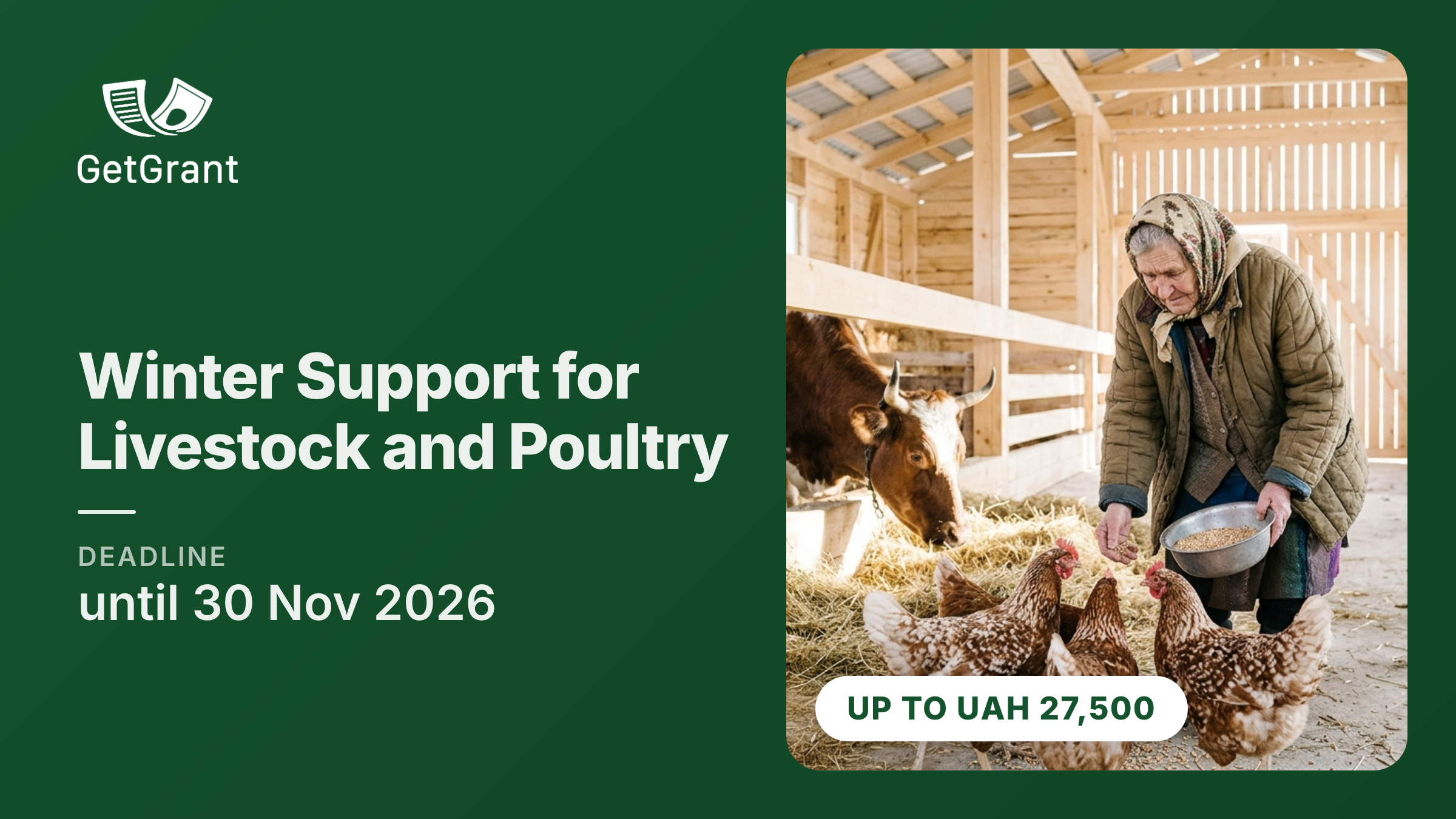
The Estonian Refugee Council has launched the Livestock and Poultry Winterisation Programme to support rural families in Ukraine who maintain farm animals. The initiative offers targeted cash grants designed to help vulnerable households prepare their livestock and poultry for the harsh winter conditions.
Households can receive up to UAH 27,500 to cover animal fodder, facility insulation, veterinary services, and related delivery or repair labour. The current call focuses on war-affected rural settlements situated within 0-50 km of the frontline, and applications are accepted until 30 November 2026.
Eligible activities and funding limits
Financial assistance is structured around specific winterisation needs, with fixed ceilings depending on the chosen category. Applicants can request up to UAH 15,716 for winter livestock and poultry feed, UAH 17,946 for shelter insulation, and UAH 2,231 for professional veterinary care. An additional UAH 8,973 is available for repair labour and delivery services, provided it is requested alongside animal feed or shelter rehabilitation.
Beneficiaries may combine multiple categories to address comprehensive seasonal needs, provided the cumulative grant amount does not exceed UAH 27,500 per household. Supported fodder includes hay, concentrated feed mixes, succulent feeds such as beets or silage, and mineral blocks. Shelter funding covers insulation materials, straw bedding, and repair tasks, while veterinary aid covers examinations, diagnostics, and treatments by licensed professionals.
The grant funds carry clear restrictions regarding their usage. The assistance cannot be spent on hazardous production inputs such as high-risk agricultural chemicals, nor can it be used to pay off existing debts, taxes, or official fees.
Geographic scope and eligibility criteria
The programme is strictly limited to rural residents residing within 0-50 km of the frontline in selected districts of three eastern and southern regions. Eligible territories include Synelnykove, Nikopol, and Kryvyi Rih districts in Dnipropetrovsk oblast, as well as Zaporizhzhia district in Zaporizhzhia oblast. In Kharkiv oblast, assistance is open to residents of Kharkiv, Izium, Chuhuiv, and Kupiansk districts.
Applicants must represent low-income displaced or non-displaced rural households that keep livestock or poultry and have suffered direct war impact. Eligibility requires official documentation of war damage or displacement, such as an IDP certificate issued over six months prior, medical records of conflict-related injury or psychological trauma, proof of a family member’s death due to hostilities, a war disability certificate, an official act of damaged property, or verified residency in an active combat zone.
Vulnerability criteria and programme rules
To qualify, households must meet at least one formal vulnerability criterion supported by relevant paperwork. Eligible profiles include families with three or more children under 18, households with pregnant women or children under two, single-parent households, families caring for members with disabilities or severe medical needs, and elderly-only households aged 60 and above.
Other eligible vulnerable categories include young households aged 24 or under, households containing discharged war veterans, families where all adults aged 18-49 are unemployed, or those where at least one member aged 50-59 is without employment. During review, priority is assigned to rural families who depend on livestock as their primary food source and are forced to use negative coping strategies to survive.
A strict timing limitation applies across all applicant categories. Households that have received similar cash support from the Estonian Refugee Council or any other humanitarian organization within the past six months are ineligible for this cycle.
Application and verification procedure
Applicants must submit an online application form accompanied by identity documents for all household members, proof of current rural address, and required vulnerability documentation. The donor evaluates submissions against standard eligibility standards, assesses household vulnerability, and evaluates the family’s capacity to execute the winterisation activities.
Shortlisted candidates undergo a verification interview conducted in person, by phone, or via video call, followed by an administrative check on budget efficiency before payments are disbursed. Following grant receipt, beneficiaries have one month to report on their purchases by submitting fiscal receipts, invoices, and photos of acquired items taken on their property.
Practical tip. Keep every fiscal receipt, delivery invoice, or payment slip immediately upon buying supplies, and photograph the delivered feed or completed shelter repairs directly on your homestead. Because the donor requires verified expense reporting within 30 days of receiving funds, having all receipts and geotagged household photos ready prevents compliance disputes.
Applications are submitted on the donor’s page: cash.pagulasabi.ee.
| Parameter | Details |
|---|---|
| Donor | Estonian Refugee Council |
| Programme | Livestock and Poultry Winterisation Programme |
| Budget | Up to UAH 27,500 per household |
| Application Deadline | 30 November 2026 |
| Who Can Apply | Low-income war-affected rural households keeping farm animals |
| Geography | Frontline rural areas (0-50 km) in Dnipropetrovsk, Kharkiv, and Zaporizhzhia oblasts |
| Type of Support | Targeted cash assistance for winter preparation |
See which other calls fit your organisation
The GetGrant database lists EU programmes, bilateral donors and foundations by organisation profile, with verified deadlines.
Frequently asked questions
Short answers based on the facts of this call
