
GenAI for Good Challenge
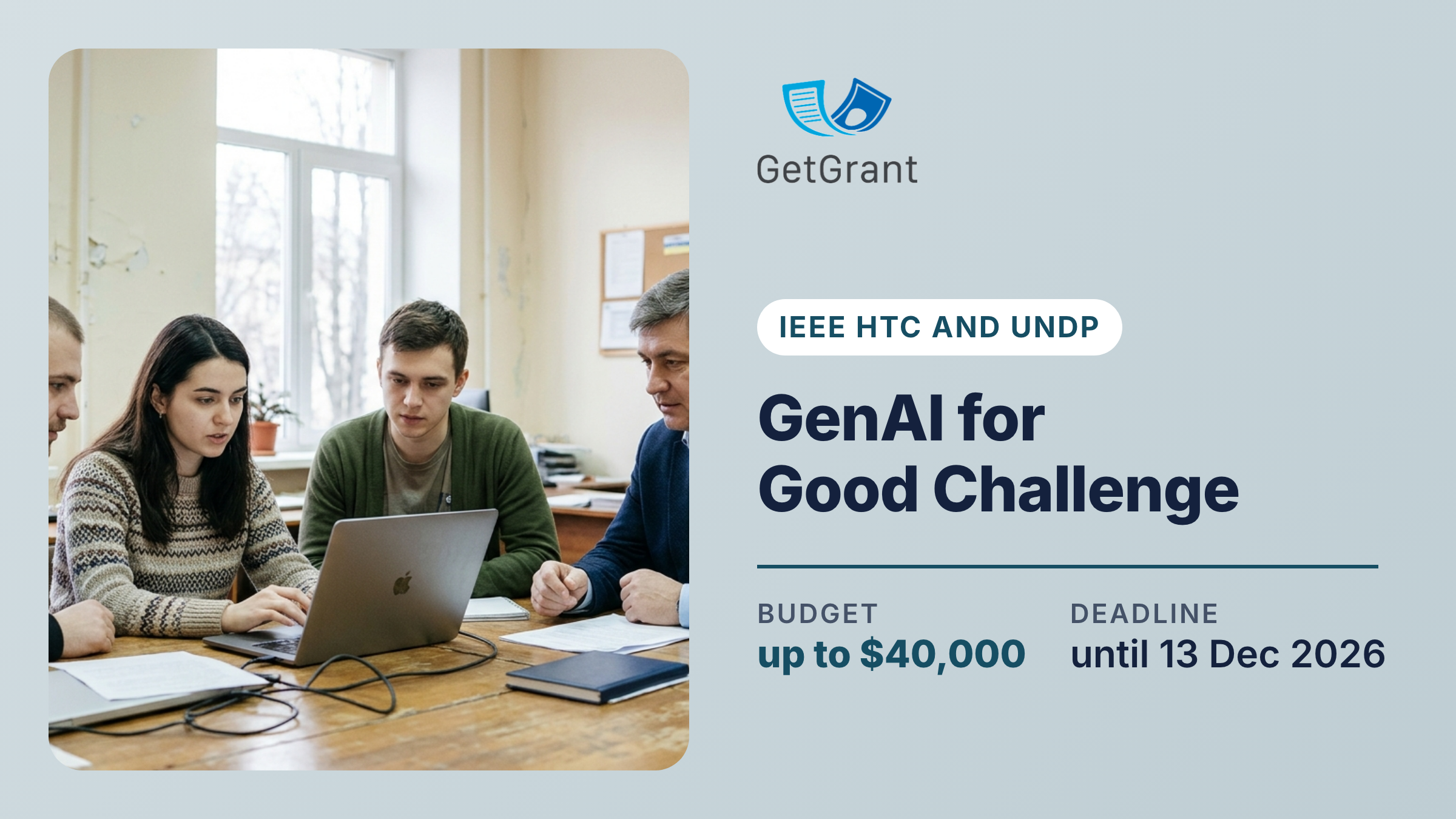
The GenAI for Good Challenge is a global innovation competition co-organized by IEEE Humanitarian Technologies and the United Nations Development Programme (UNDP). The initiative pairs technical developers with municipal governments across Europe and Central Asia to co-develop, test, and deploy responsible, open-source generative artificial intelligence solutions for pressing urban challenges.
The challenge focuses on three real-world city use cases aligned with the twin green and digital transition. Winning teams in each track can receive up to $40,000 to advance their projects from prototyping to municipal deployment. The final deadline to complete all application steps is December 13, 2026, at 11:59 PM Eastern Time.
What is funded
The competition supports the development and deployment of open-source generative AI solutions designed for city governments. Projects must directly target one of three municipal use cases: modernizing transit route reviews in Pristina (Kosovo), unlocking energy efficiency investments for buildings in Rivne (Ukraine), or safeguarding urban green infrastructure records for the digital Green Cadastre in Skopje (North Macedonia).
Winning teams receive up to $40,000 per track to support solution development, scaling, and real-world municipal deployment. Funding and structured collaboration with city stakeholders enable participants to progress through structured phases including sprints, prototyping, and active piloting.
All proposed technical solutions are required to integrate the GENIE AI open-source framework. Teams receive technical resources, training modules, and configuration documentation to assist with the implementation of this mandatory architecture.
Who can apply
Participation is open exclusively to individuals worldwide collaborating in informal teams. Each team must consist of at least two members, and all participants must be at least 18 years of age at the time of entry.
Corporate entities, established companies, and formal organizations are strictly ineligible to participate. The competition seeks independent innovators, engineers, data scientists, and AI practitioners who can commit to the initiative throughout the entire project cycle.
Practical tip. Ensure every member of your group meets the age and independent status criteria before starting, and coordinate early to establish an informal team agreement covering technical roles for both application portals.
Conditions and requirements
Applicants must agree to a one-year commitment covering all competition stages, which include development sprints, prototype creation, and municipal piloting alongside city partners. Proposed initiatives must maintain strict alignment with the priorities of the selected partner municipality.
All intellectual outputs, including software code, datasets, technical documentation, and models, must be released under an approved permissive open-source license, such as MIT or Apache 2.0. Participants are prohibited from seeking personal financial gain or patent rights from the developed assets.
In the narrative proposal, teams must explicitly detail how they intend to incorporate the GENIE AI framework into their technical build. The initiative emphasizes responsible AI principles, ensuring tools are safe, transparent, and tailored for public-sector use.
How to apply
The application process requires completing two mandatory submissions across two separate platforms before the deadline. Teams must prepare both a narrative proposal through the official Funding Portal and a practical technical evaluation hosted on the Zindi platform.
The narrative submission requires a structured proposal outlining the solution concept, integration of GENIE AI, and overall problem-solving approach. The technical evaluation on Zindi assesses hands-on capabilities through a practical data science task, where the top 100 technical performers advance to panel review.
Both components must be fully submitted by 11:59 PM ET on December 13, 2026. Incomplete or late submissions on either platform will not be considered by the evaluation committee.
Applications are submitted on the donor’s page: ieeeht.org.
| Parameter | Details |
|---|---|
| Donor | IEEE Humanitarian Technologies and UNDP |
| Programme | GenAI for Good Challenge: Cities Edition |
| Budget | Up to $40,000 per winning team in each track |
| Deadline | December 13, 2026, 11:59 PM ET |
| Who can apply | Informal teams of at least 2 individuals aged 18 or older (no companies or organizations) |
| Geography | Global applicants (targeting use cases in Pristina, Rivne, or Skopje) |
| Type of support | Grant funding, technical frameworks, and municipal piloting support |
See which other calls fit your organisation
The GetGrant database lists EU programmes, bilateral donors and foundations by organisation profile, with verified deadlines.
Frequently asked questions
Short answers based on the facts of this call
