15 official funder platforms for business, science, culture and civil society organisations in Ukraine: budgets, Ukraine's status, grant sizes and confirmed dates until spring 2027. Data checked on 13 October 2026.
In 2026 there is more grant money for Ukraine than ever before, but finding it has become harder: some familiar donors have disappeared, some programmes have changed their rules, and the largest funds do not run open calls at all. We have collected 15 official platforms where calls are announced by the funders themselves and checked each one against the primary source on 13 October 2026: budget, Ukraine’s status, grant size and the nearest dates.
Short answer
- The biggest money is in EU programmes: Horizon Europe (€93.5 billion for 2021–2027), Erasmus+ (over €26 billion), Digital Europe (over €8.1 billion), LIFE (€5.4 billion), EU4Health (€4.4 billion), Creative Europe (€2.44 billion). All calls are published on a single portal, Funding & Tenders.
- The easiest entry for business in Ukraine: the state eRobota grants via Diia (from UAH 100,000 to UAH 1 million, applications accepted continuously) and Brave1 for defence technologies (up to UAH 8 million, more than 1,000 grants awarded).
- For culture: the Ukrainian Cultural Foundation, House of Europe and Creative Europe. For science: Horizon Europe and the National Research Foundation of Ukraine.
- For civil society organisations: the International Renaissance Foundation, the Visegrad Fund and the European Endowment for Democracy, which accepts applications in Ukrainian with no deadlines.
- What is no longer there in 2026: the U.S. Embassy grants page does not work, and the Ukraine Facility and the World Bank, despite tens of billions, have no calls for ordinary applicants.
How we selected the platforms
The list includes only the websites of the funders themselves: the European Commission and its agencies, Ukrainian state funds and international foundations that sign grant agreements directly. There were three criteria: how much money the programme actually distributes, whether a Ukrainian organisation can apply on its own or in a partnership, and whether the site has a live section with calls.
One more hint about popularity: the GetGrant database currently holds more than 2,000 calls, and 433 of them belong to a single programme, Horizon Europe. No other funder provides even a third of that number.
European Union: seven main doors
1. EU Funding & Tenders Portal
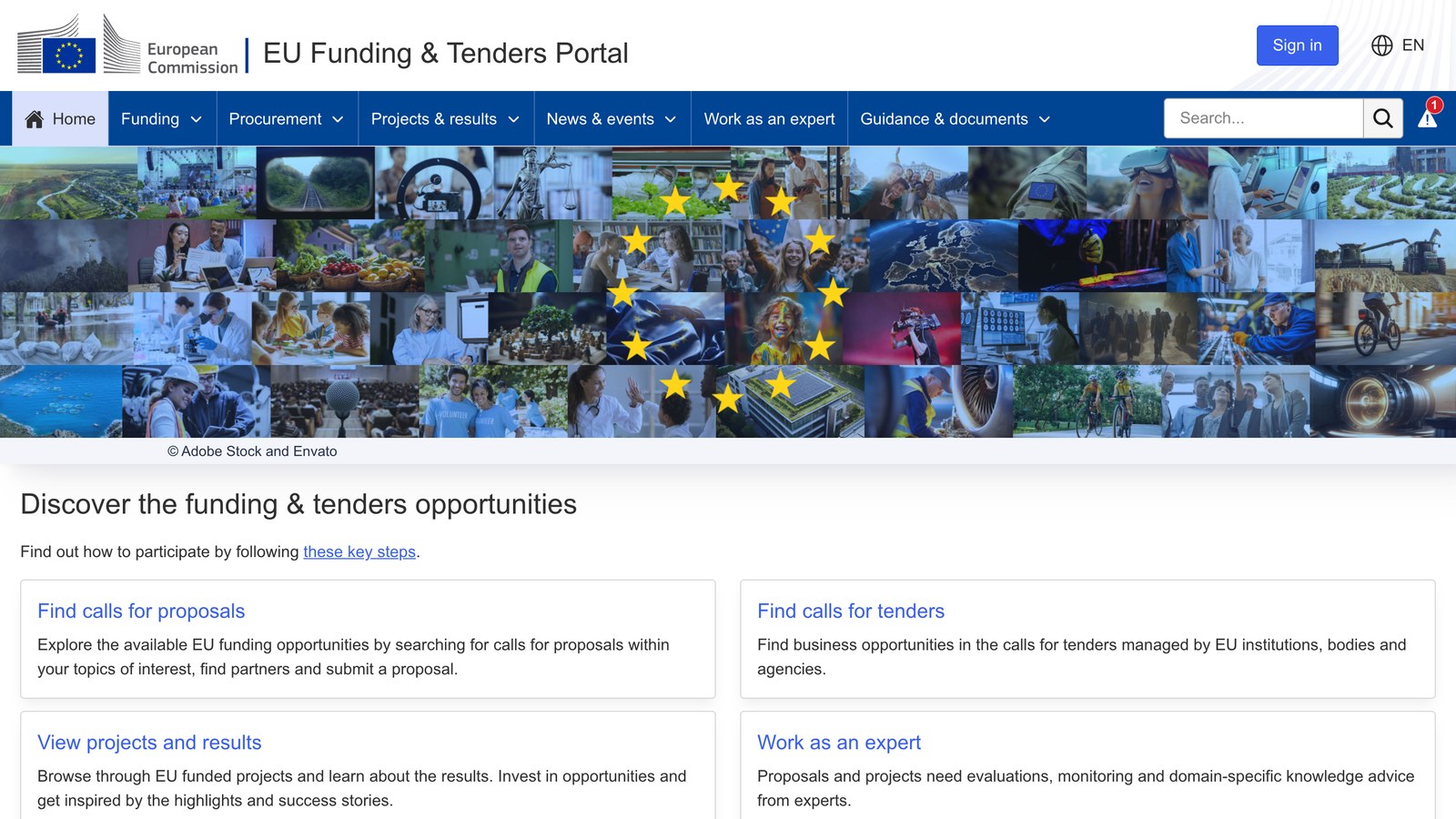
The single entry point to all programmes managed directly by the European Commission. Calls for Horizon Europe, Digital Europe, LIFE, EU4Health, Creative Europe, the defence programmes and several dozen others are published here. This is also where the proposal is submitted, the grant agreement is signed and reports are filed.
- Who it is for: any legal entity, from a university or a civil society organisation to a small business or a local authority.
- Money: the portal has no budget of its own, it gives access to the programmes described below.
- Ukraine: eligibility is defined separately for each programme, so in every call check the section on participating countries.
- Tip: register your organisation and obtain a PIC code in advance, and look for partners with the built-in Partner Search tool.
Go to the Funding & Tenders Portal
2. Horizon Europe
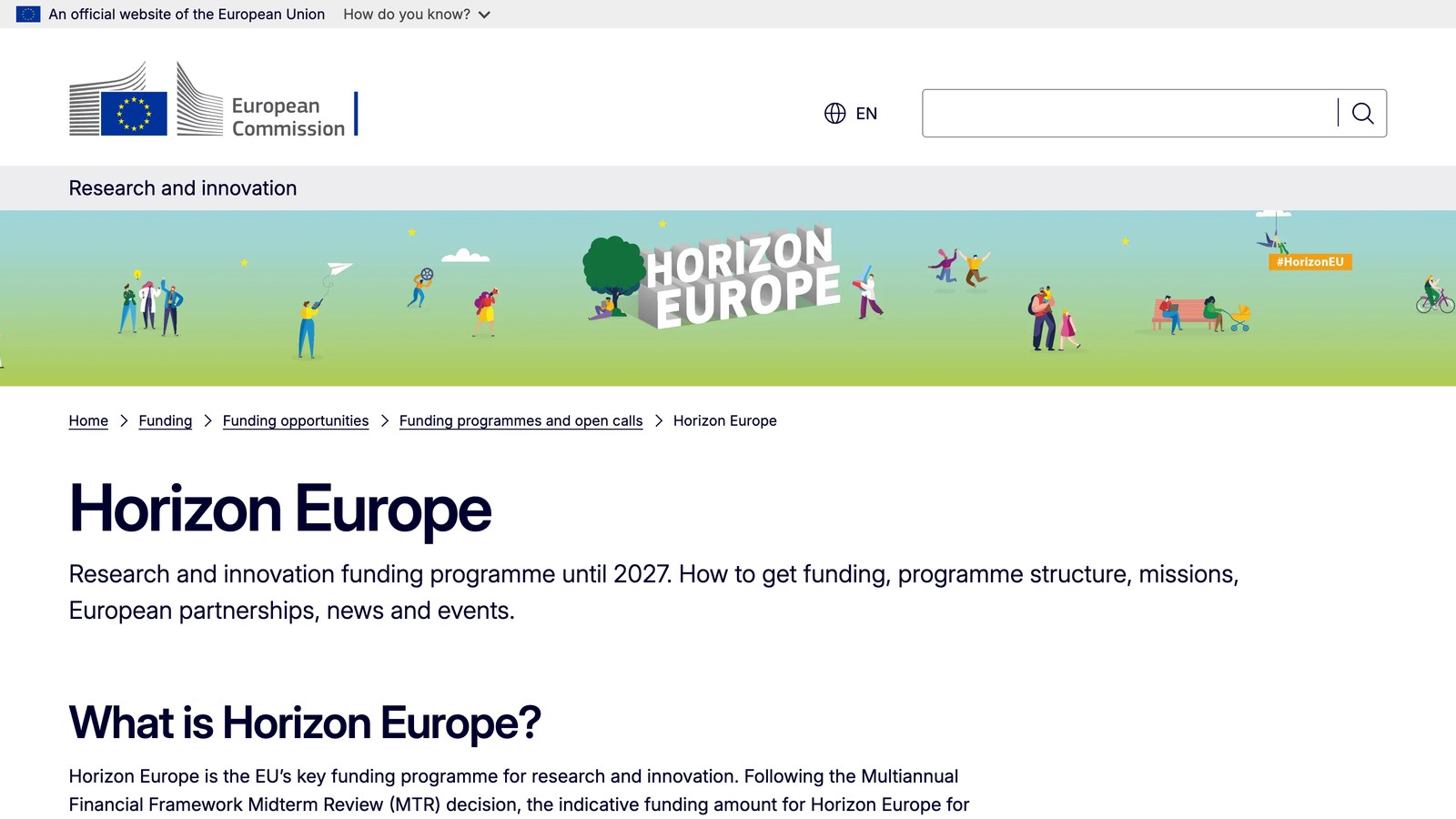
The world’s largest research and innovation funding programme. Ukraine has the status of an associated country, so Ukrainian universities, institutes and companies take part on the same terms as participants from the EU and can coordinate consortia.
- Who it is for: research institutions, universities, innovative businesses, start-ups, communities and civil society organisations within consortia.
- Money: €93.5 billion for 2021–2027. The work programmes for 2026–2027 were updated on 29 September 2026, and the European Commission added another €500 million: about €14.8 billion in total for the two years.
- Separate doors inside: the EIC Accelerator for start-ups and small businesses (a grant of up to €2.5 million and an investment of €1 to €10 million, the last cut-off for full proposals in 2026 is 4 November), ERC grants for researchers and MSCA fellowships for researcher mobility.
- What is next: for 2028–2034 the European Commission has proposed €175 billion for the next framework programme; negotiations are ongoing.
- Tip: the Horizon Europe Office in Ukraine maintains the list of national contact points, and applicants from Eastern Partnership countries can get a free consultation from European Commission experts on their proposal until May 2027.
Horizon Europe programme page · Horizon Europe Office in Ukraine · EIC Accelerator
3. Erasmus+
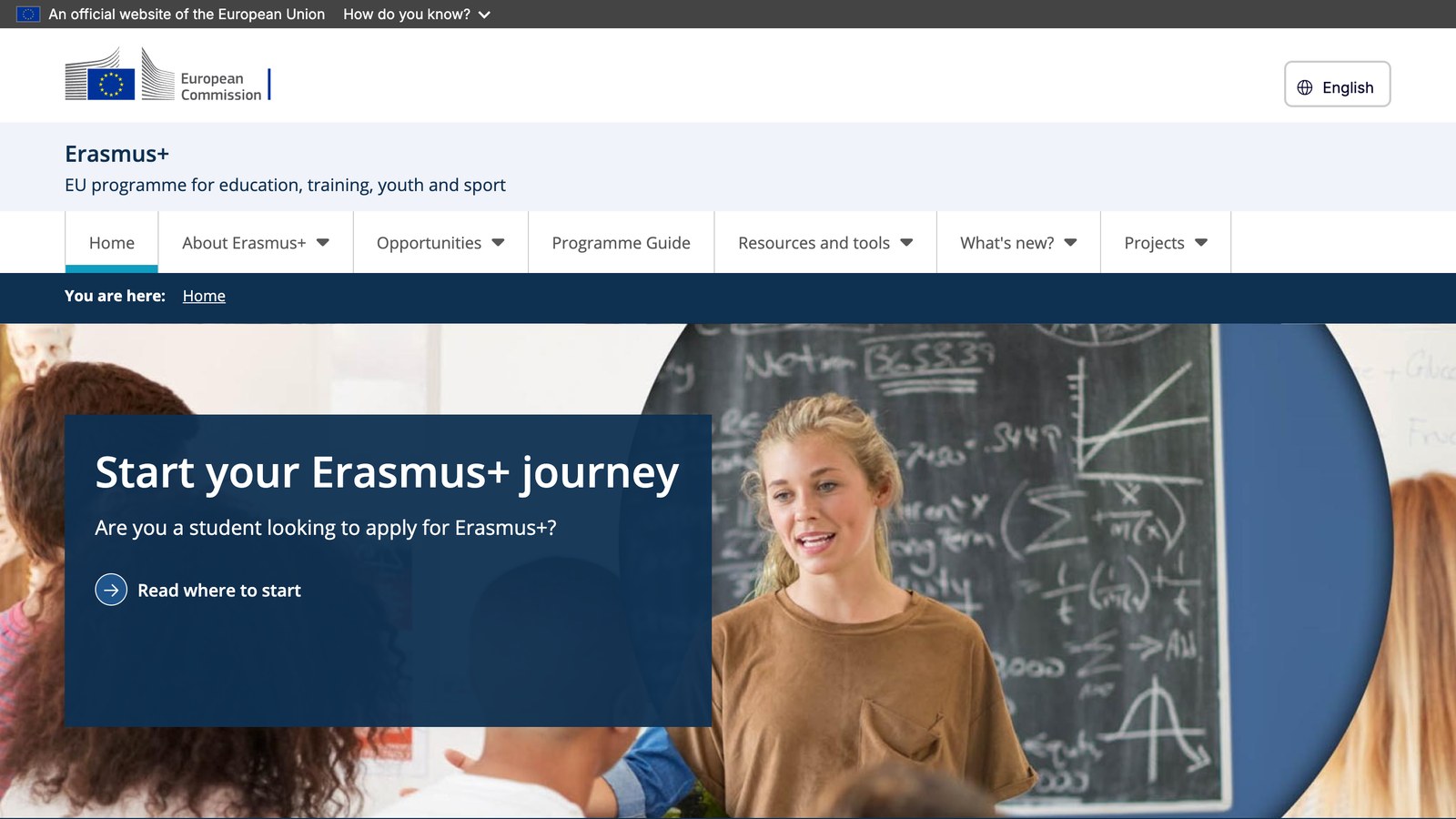
The EU programme for education, youth and sport. An important nuance that is often confused: Ukraine is not an Erasmus+ associated country. It belongs to the third countries of the Neighbourhood East region and can take part only in some of the actions, for example capacity building in higher education, Jean Monnet modules, youth exchanges and joint master’s programmes.
- Who it is for: universities, schools, vocational education providers, youth and civil society organisations.
- Money: over €26 billion for 2021–2027.
- What is new: in June 2026 an inter-agency group began work in Ukraine on preparing for association with the programme; the goal is full participation from 2028.
- When to apply: the European Commission usually announces the call for the following year in November together with the new Programme Guide, and the main deadlines fall in February and March.
- Tip: the National Erasmus+ Office in Ukraine regularly holds webinars for applicants and explains which actions are open to Ukrainian organisations.
Official Erasmus+ website · National Erasmus+ Office in Ukraine
4. Creative Europe
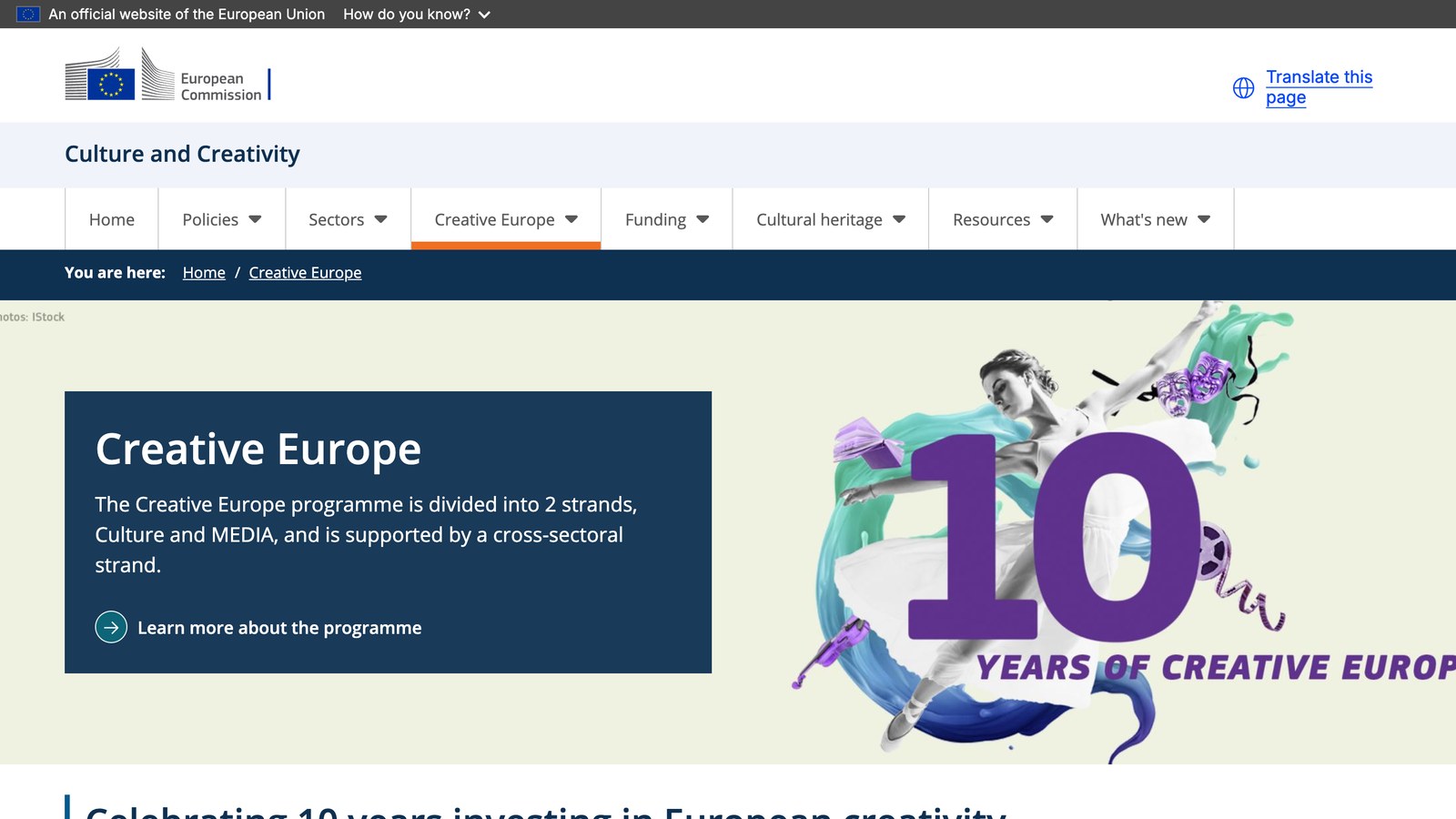
The only EU programme devoted entirely to culture and the audiovisual sector. Ukraine takes part in it, and the calls are run by the executive agency EACEA.
- Who it is for: cultural and creative organisations: theatres, museums, publishers, festivals, film companies. Individuals do not apply.
- Money: €2.44 billion for 2021–2027.
- How it works: the most popular format is European cooperation projects. A small project needs at least 3 partners from 3 countries, a medium one 5 from 5, a large one 10 from 10; duration is up to 48 months.
- What is new: on 30 September 2026 EACEA announced the launch of the 2027 work programme, and the first calls have already appeared on the portal.
- Tip: publishers should watch the call for the translation and circulation of European literary works, and film producers the MEDIA strand.
Creative Europe calls on the EACEA website
5. Digital Europe
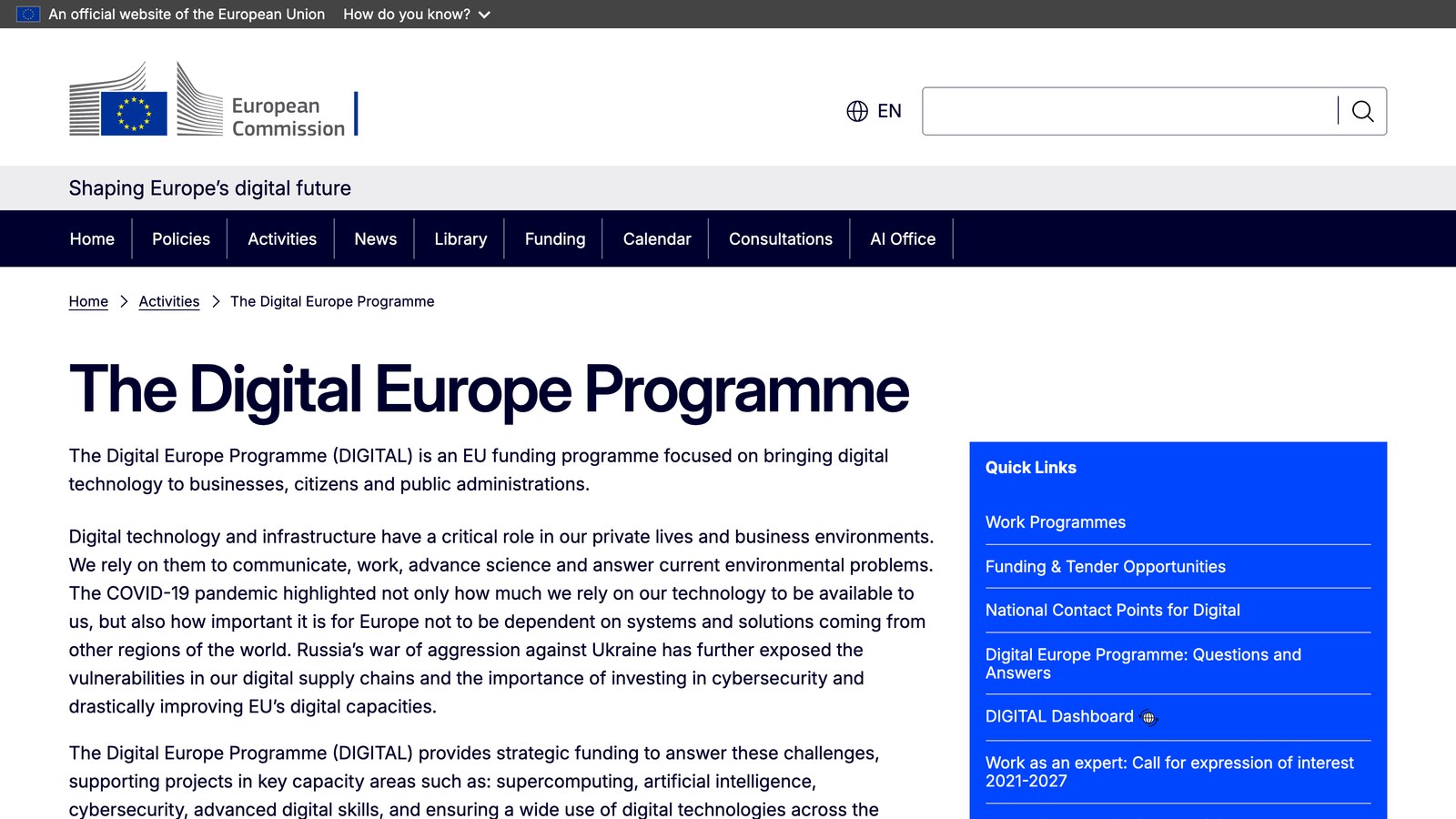
The Digital Europe Programme funds deployment rather than research: supercomputers, artificial intelligence, digital skills and the digitalisation of business and public services. Ukraine has been associated with the programme since 5 September 2022.
- Who it is for: IT companies, universities, public bodies, digital innovation hubs.
- Money: over €8.1 billion for 2021–2027.
- Ukraine: participation is open in supercomputing, artificial intelligence, digital skills and the deployment of digital solutions. Cybersecurity was not on that list, so in cybersecurity calls the eligibility conditions must be checked separately.
- Coming up: three cybersecurity calls accept proposals until 14 January 2027.
- Tip: European Digital Innovation Hubs already operate in Ukraine, and small businesses can get services through them without a grant application of their own.
6. LIFE
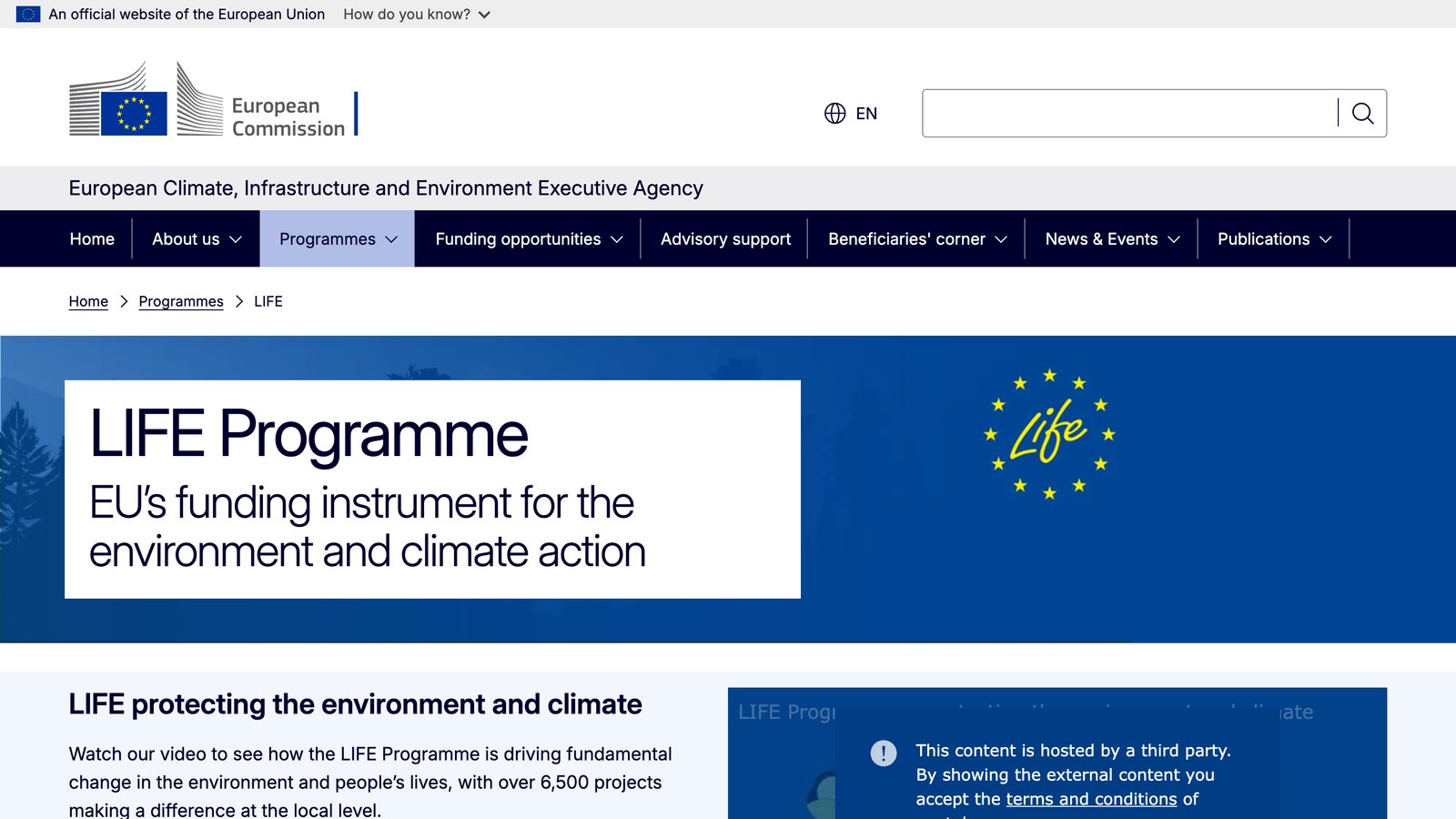
The only EU programme fully dedicated to the environment and climate: nature conservation, the circular economy, climate change adaptation and the clean energy transition. Ukraine joined LIFE in 2022.
- Who it is for: civil society organisations, local authorities, municipal enterprises, businesses, research institutions.
- Money: €5.4 billion for 2021–2027; the 2026 calls had a budget of €601.5 million.
- When to apply: the main intake for standard action projects in 2026 closed on 22 September. LIFE calls are announced once a year, usually in April, so winter is the time to prepare the idea and look for partners.
- Tip: LIFE requires co-financing, so the budget and the source of your own contribution should be thought through before the call is announced.
LIFE calls 2026 on the CINEA website
7. EU4Health
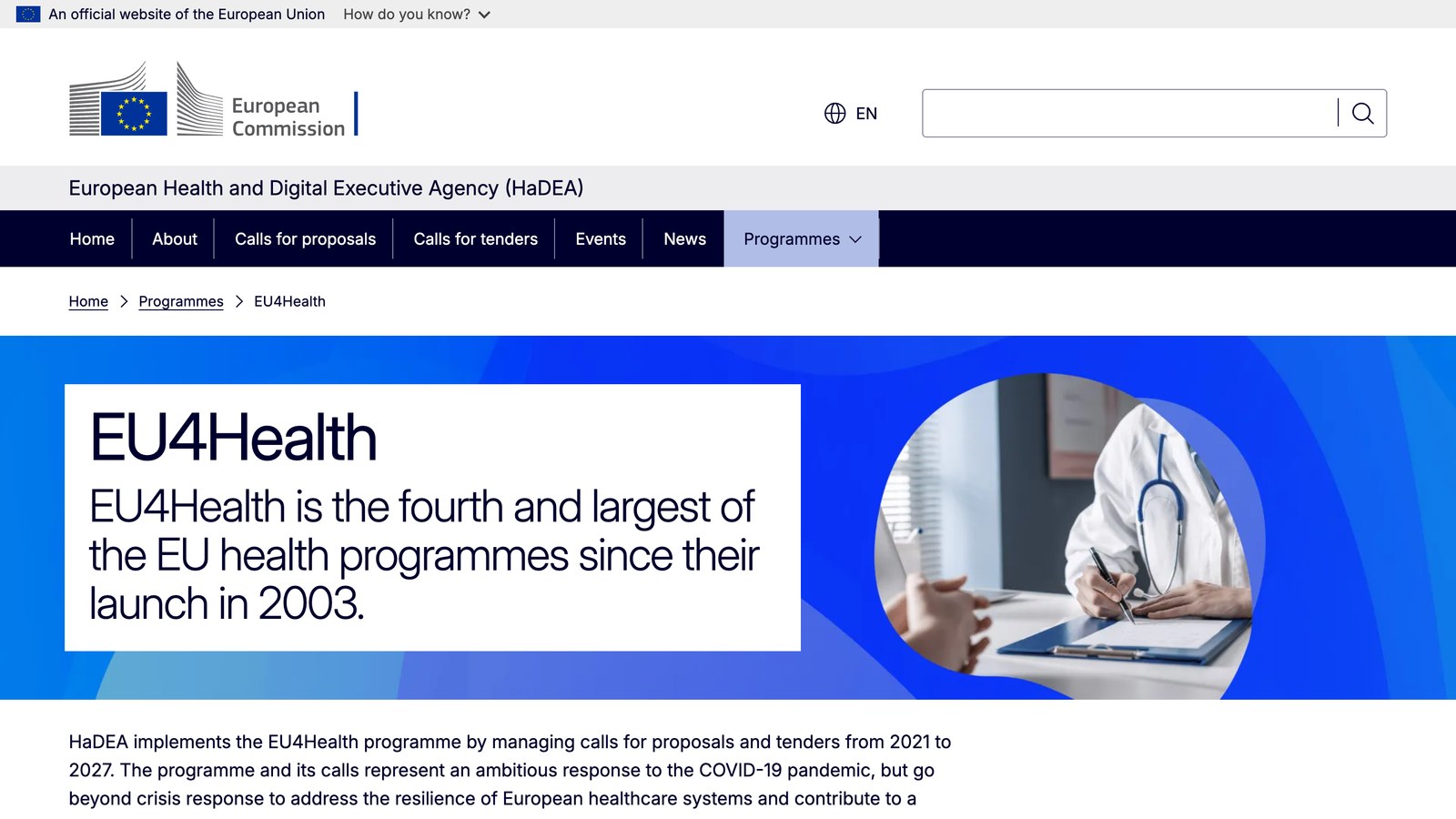
The EU programme in the field of health. Ukraine has been associated with it since 1 January 2022: public and private organisations can take part in open calls, direct grants and joint actions.
- Who it is for: healthcare providers, patient and civil society organisations, universities, public authorities.
- Money: €4.4 billion for 2021–2027 (initially €5.3 billion; the budget was cut during the revision of the EU’s long-term budget).
- How it works: the calls are run by the HaDEA agency; the 2025 work programme had €555.9 million.
- Tip: most calls are designed for consortia, so the simplest way in is to join the proposal of an experienced European partner.
EU4Health page on the HaDEA website
Ukraine: state money for business, defence, culture and science
8. eRobota: state grants for business in Diia
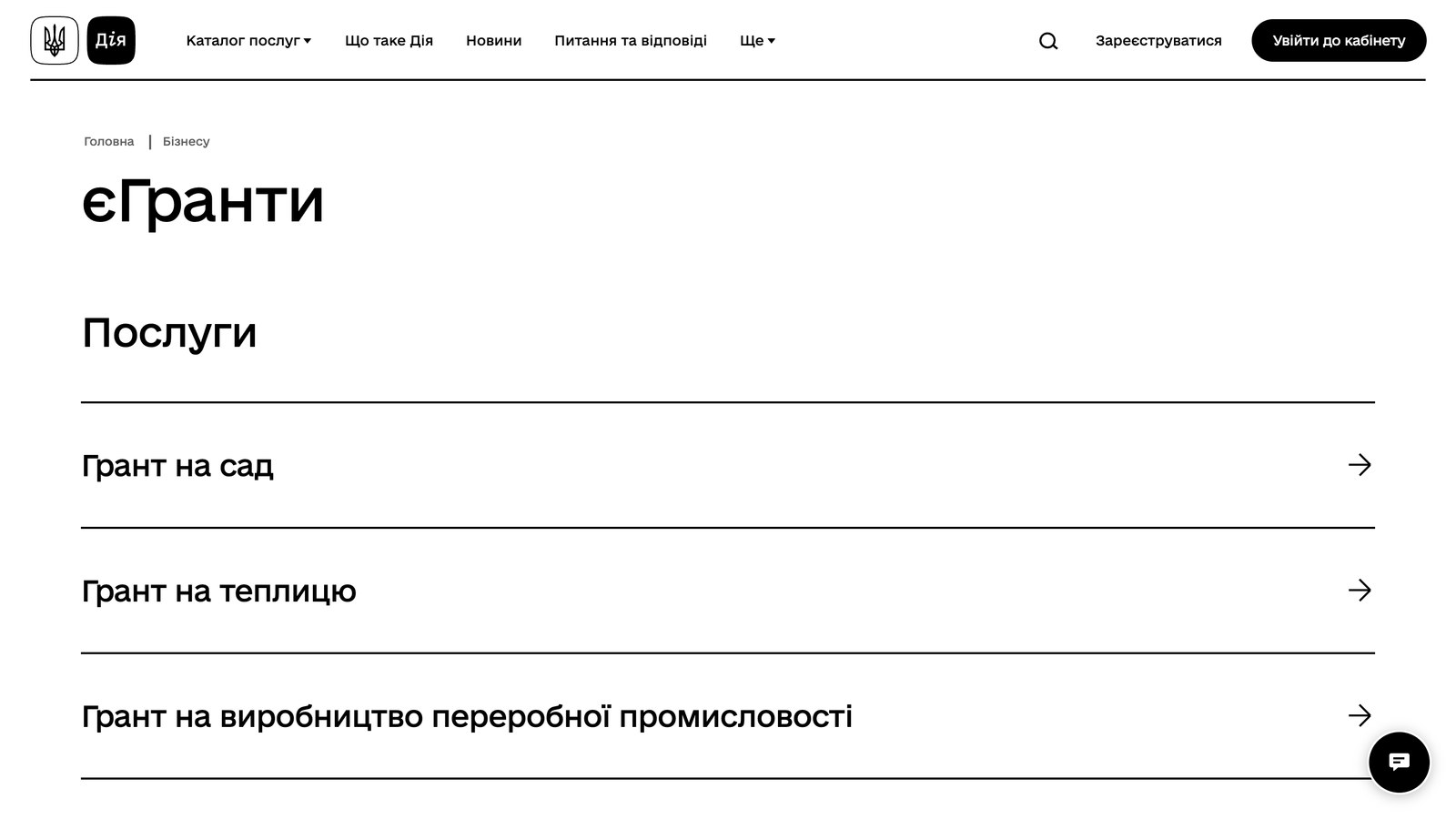
The country’s most widely used grant programme. The application is filed online in Diia, without a competition in the usual sense: the decision is based on the business plan and an interview.
- Who it is for: those who are starting or expanding their own business, veterans and their family members, processing enterprises, orchard growers and greenhouse owners.
- Money in 2026: up to UAH 100,000 without creating jobs, up to UAH 200,000 with one job, up to UAH 350,000 with two. In frontline regions up to UAH 300,000 and UAH 500,000. For young people aged 18–25 up to UAH 200,000. For veterans and their family members up to UAH 1 million, of which the state covers 70%.
- Scale: in 2025 own-business grants went to 10,600 entrepreneurs for UAH 2.7 billion, which means about 17,000 jobs.
- What is new: the updated rules have applied since 4 February 2026, and applications are accepted continuously.
- Tip: there is no deadline, but the money for some strands (orchards, greenhouses) ran out early in autumn 2025. Apply at the beginning of the budget year.
eRobota grants on the Diia portal
9. Brave1
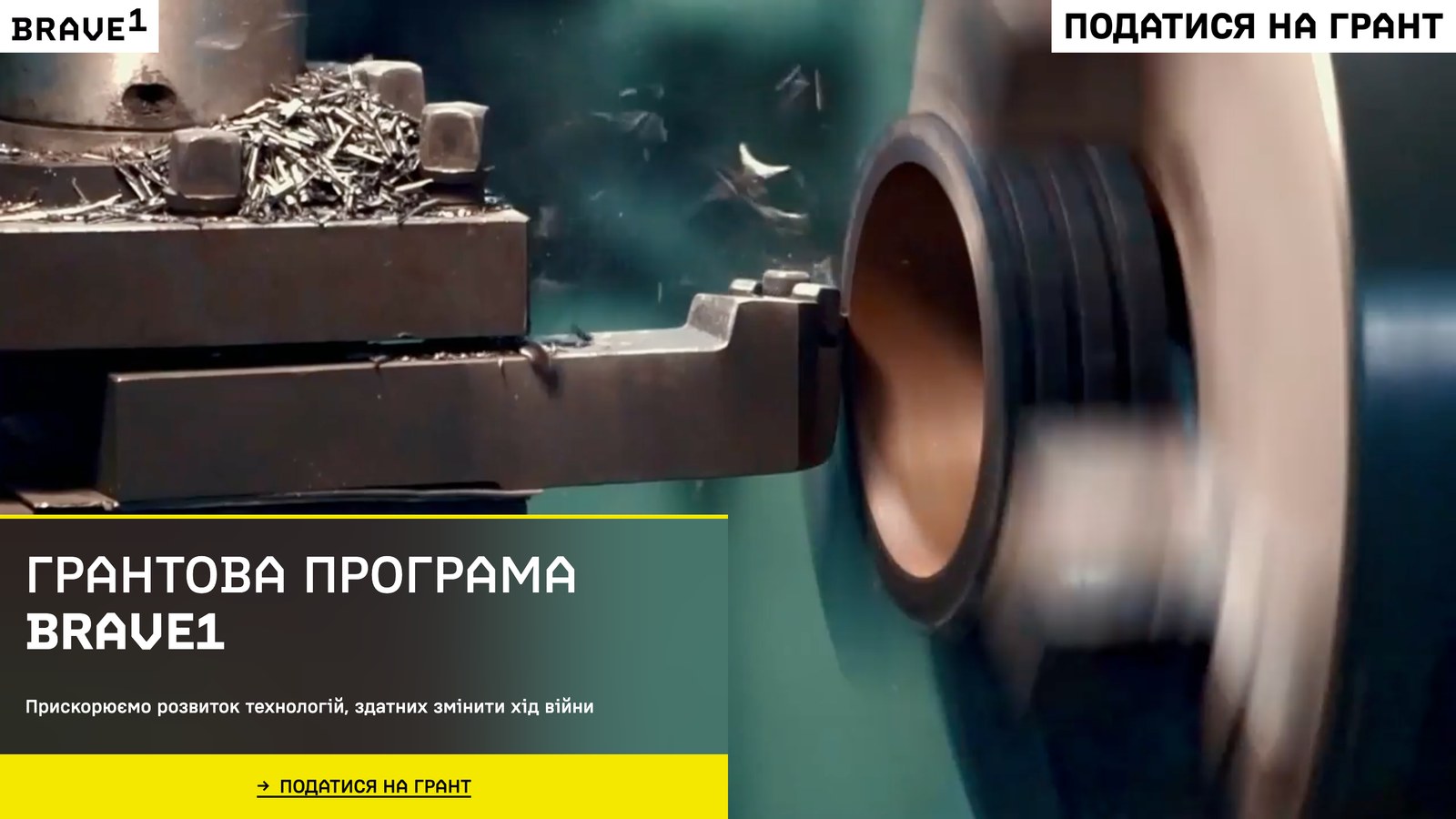
The state defence tech cluster and the largest source of non-repayable grants for developers in this field.
- Who it is for: Ukrainian companies and individual entrepreneurs. State and municipal enterprises, civil society and charitable organisations are not eligible.
- Money: up to UAH 500,000 at the idea stage, up to UAH 2 million for a laboratory sample, up to UAH 4 million for a prototype, up to UAH 8 million for a finished product and testing.
- Scale: as of 14 September 2026 Brave1 had awarded more than 1,000 grants worth UAH 6.2 billion.
- Tip: first check your development against the current list of priorities. The grant takes neither a stake in the company nor the rights to the development.
10. Ukrainian Cultural Foundation
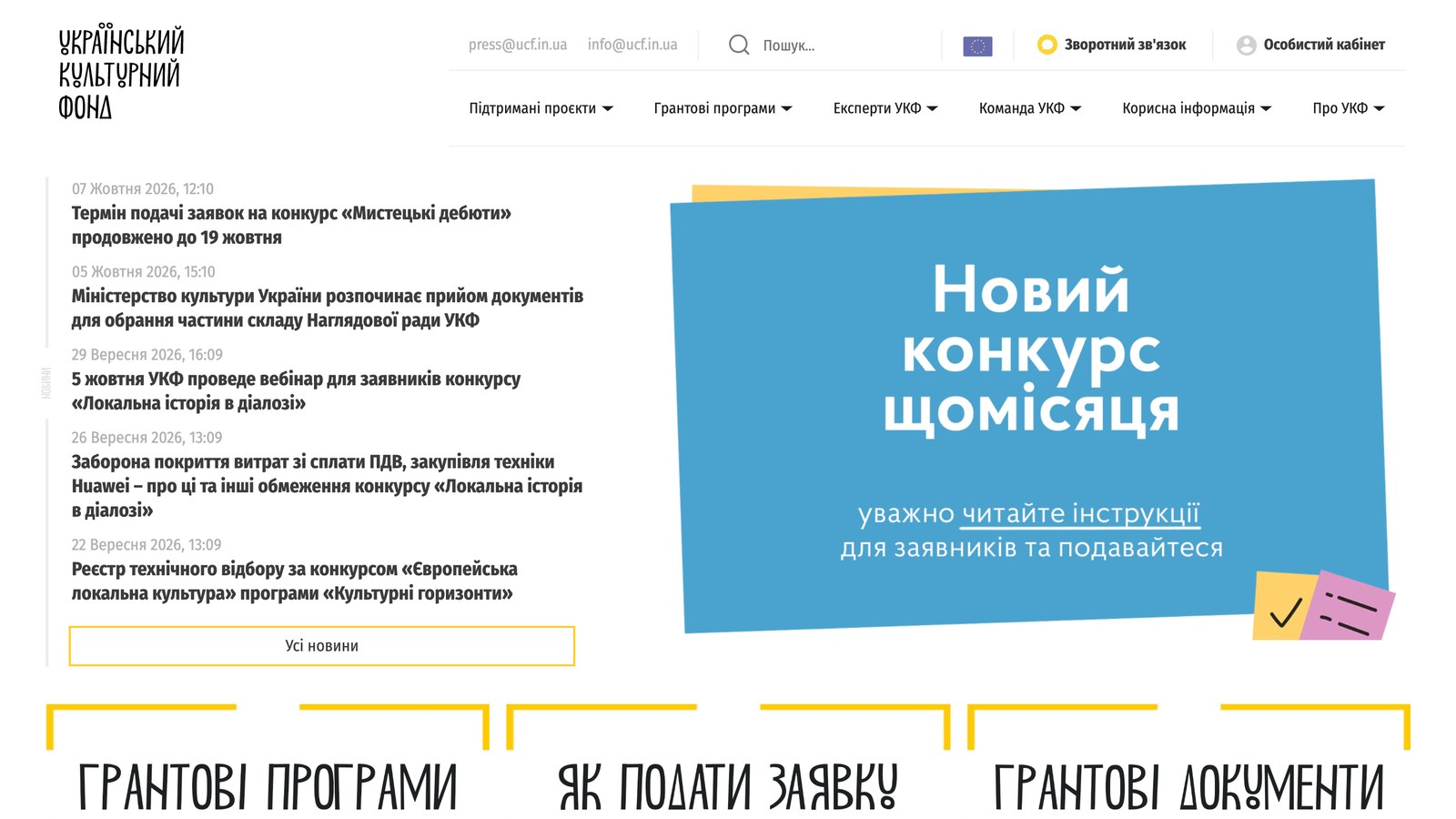
The main state funder in culture. In addition to state budget programmes, the foundation administers calls financed by international partners.
- Who it is for: legal entities and individual entrepreneurs in culture and the creative industries, cultural institutions, civil society organisations.
- Money: the grant size depends on the lot. In October 2026 the foundation was accepting applications for “Artistic Debuts” (from UAH 250,000 to UAH 715,000) and “Local History in Dialogue” (from UAH 500,000 to UAH 1 million).
- What is new: the “Cultural Horizons” programme, financed by Creative Europe, has UAH 35.3 million for 2026–2027; an “Artistic Mobility” call is still to come.
- Tip: the application is submitted only through the foundation’s system, and the amount cannot be changed after submission. Register your organisation in advance.
Ukrainian Cultural Foundation website
11. National Research Foundation of Ukraine
The state fund that distributes money for science through competitions with independent peer review. It also runs the Horizon Europe Office in Ukraine.
- Who it is for: research teams applying through their institution or university.
- Calls in 2026: “Frontier Fundamental Science 2027–2029”, “Individual Research Projects 2027–2028” and “Applied Science for the Resilience and Recovery of Ukraine”. The intake closed in April and May, and the foundation promises results by about 15 December 2026.
- When to apply: in 2026 the calls opened at the end of March. There are no new announcements for autumn and winter.
- Tip: in December look through the lists of winners: the topics and the composition of the teams will show what the foundation actually supports.
National Research Foundation of Ukraine website
International foundations that work with Ukraine directly
12. House of Europe
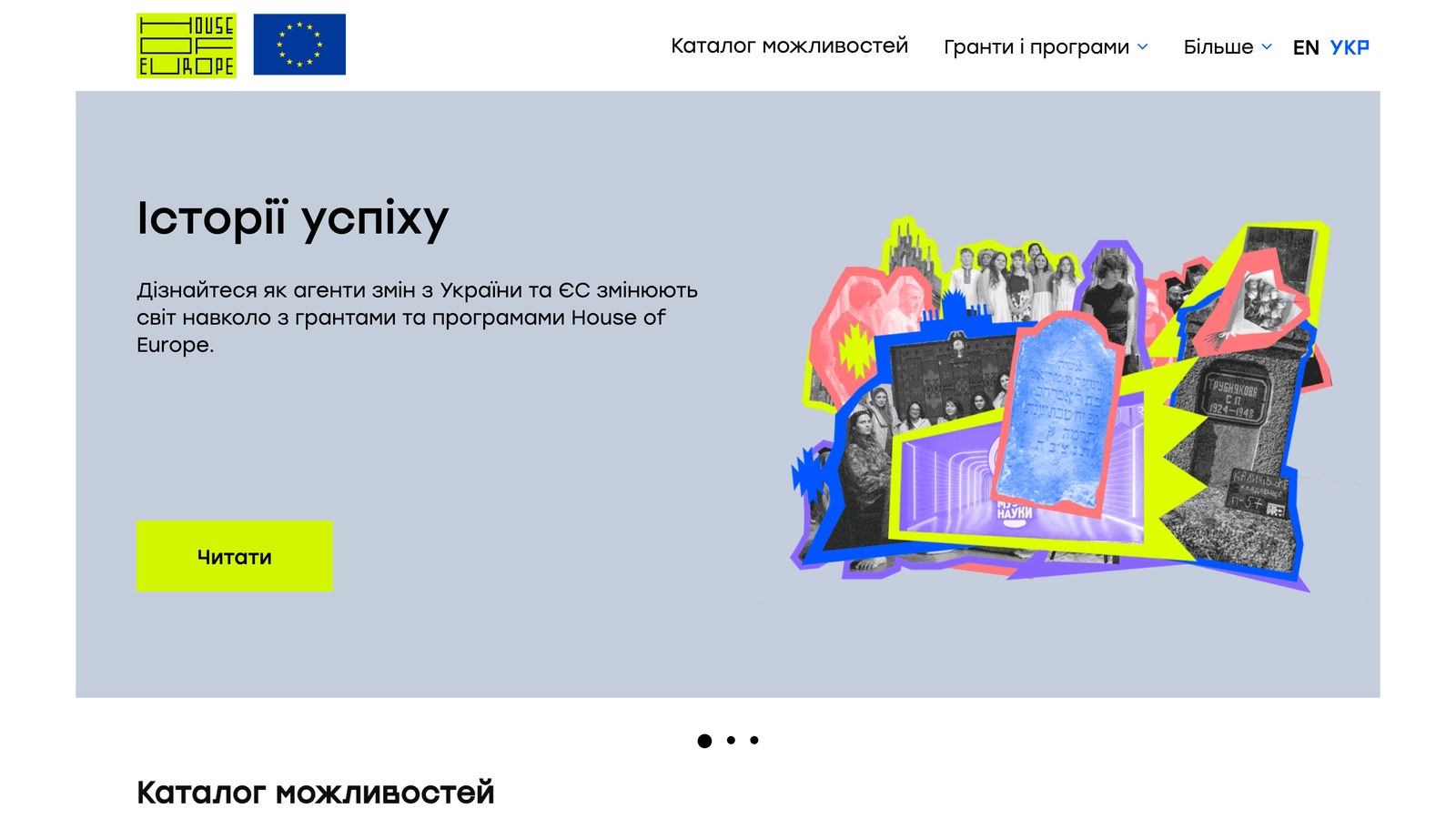
A programme funded by the EU and implemented by the Goethe-Institut. It supports culture, the creative industries, education and youth work.
- Who it is for: non-profit cultural organisations, artists, translators and publishers.
- Money: international cooperation grants of up to €50,000 (with partners from the EU or the United Kingdom); infrastructure grants from €10,000 to €20,000 (small) and from €60,000 to €99,000 (large), with priority for organisations outside Kyiv. There are also grants for translations, mobility, heritage digitisation and local events.
- Status in October 2026: there are no open rounds of its own grants on the site; the catalogue shows partners’ opportunities.
- Tip: new rounds are announced in the newsletter and on social media, so a subscription is more reliable here than checking the site once a month.
13. International Renaissance Foundation
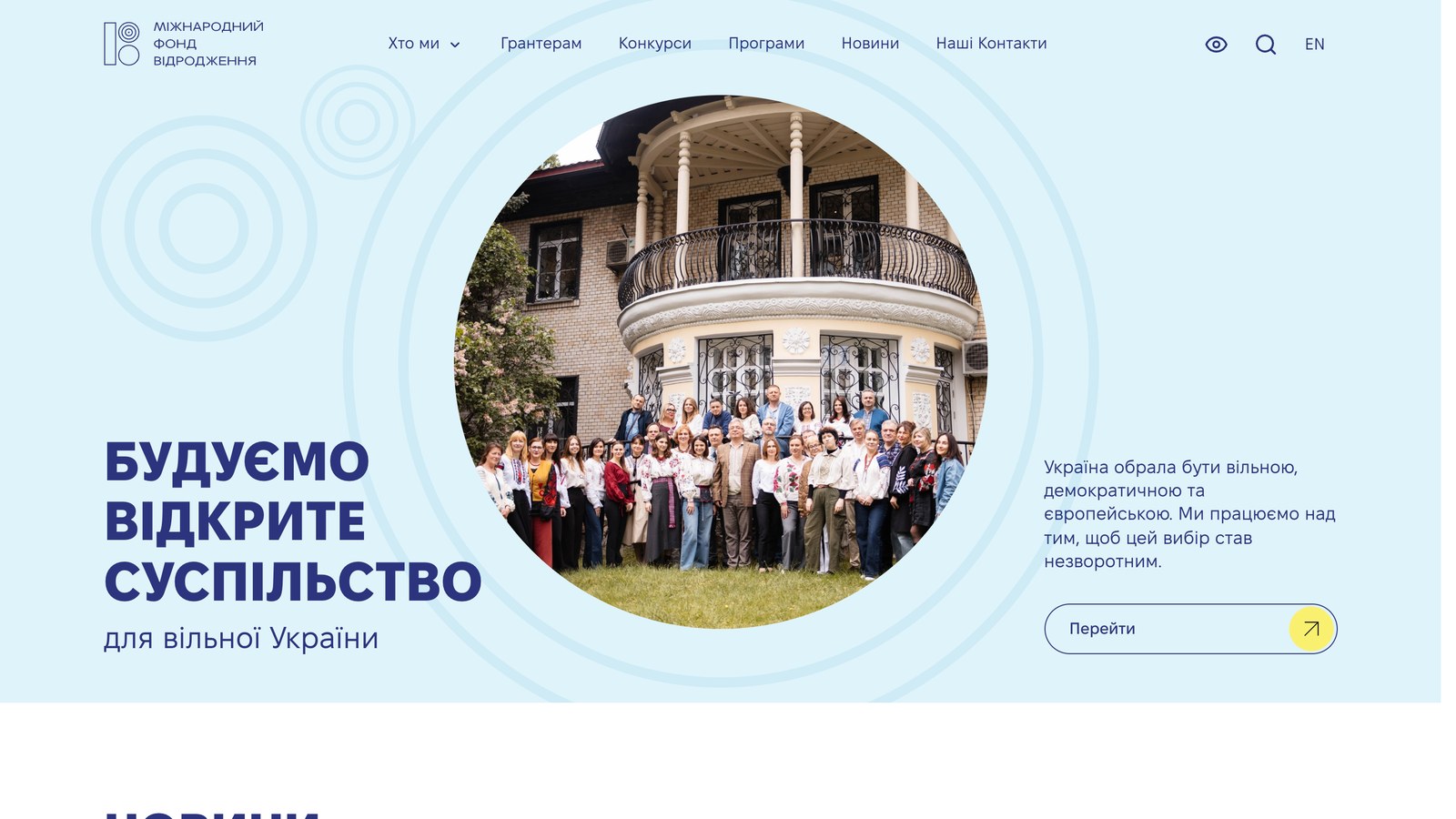
One of the largest non-state donors to civil society in Ukraine.
- Who it is for: primarily civil society organisations, think tanks and independent media.
- Scale: in 2024 the foundation provided UAH 592.6 million for 427 projects by 280 organisations.
- How it works: the grant size is set by each call separately. The foundation also considers socially important projects outside announced calls.
- Tip: calls appear irregularly, and applications are submitted in Ukrainian. Check the calls page once a week.
International Renaissance Foundation calls
14. International Visegrad Fund
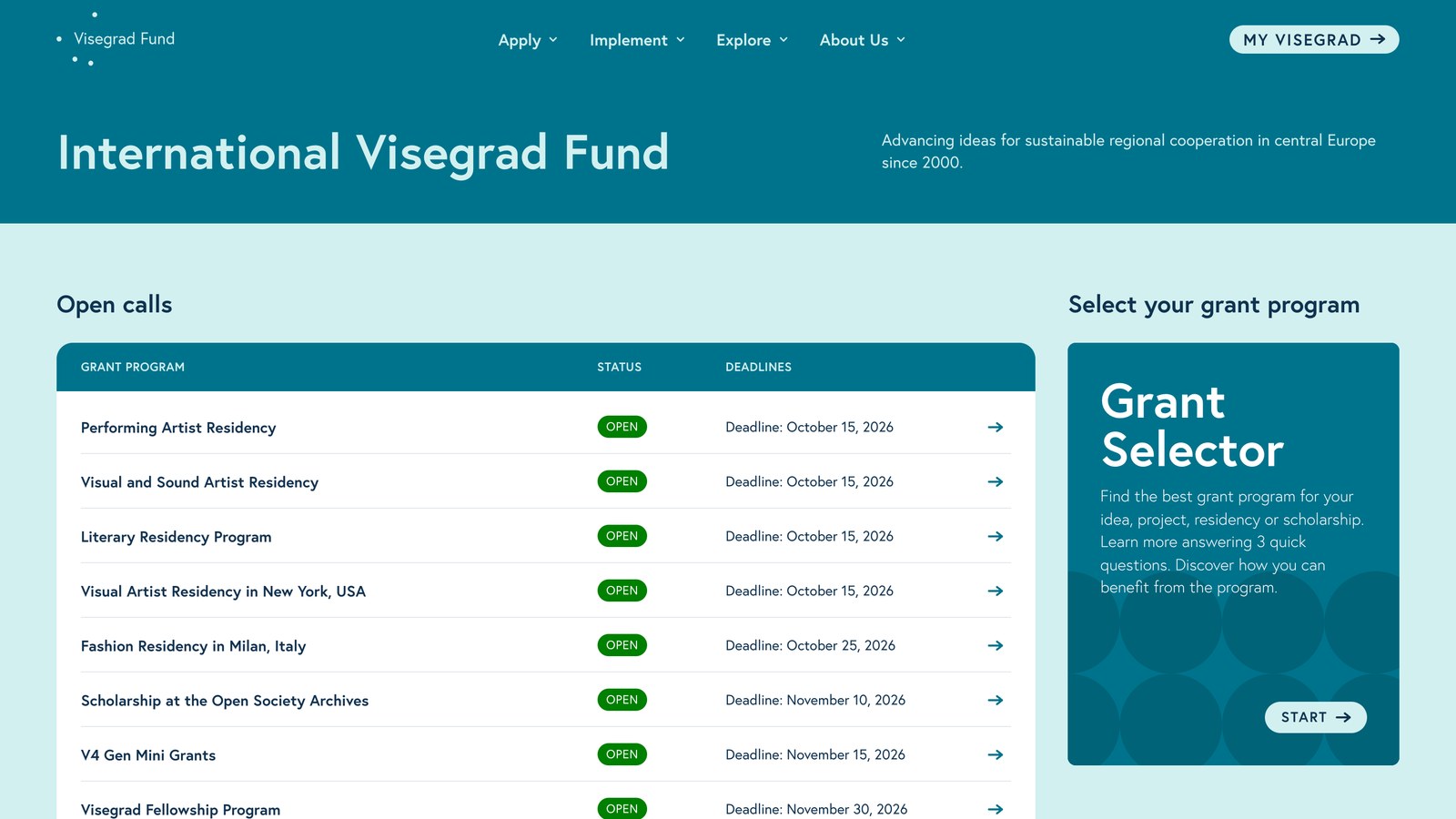
The fund of Poland, Czechia, Slovakia and Hungary. The Visegrad+ programme is open to Eastern Partnership countries, and a simplified rule applies to Ukraine.
- Who it is for: any non-governmental legal entity: civil society organisations, universities, cultural institutions. Individuals, state administration bodies and private entrepreneurs do not apply.
- Money: a typical grant is €25,000 to €35,000, and the fund can cover up to 100% of the budget; duration is up to 18 months.
- Exception for Ukraine: one Ukrainian participant and two partners from different Visegrad Group countries are enough.
- When to apply: three times a year: 1 February, 1 June and 1 October. The nearest deadline under the standing schedule is 1 February 2027.
- Tip: the fund consults applicants free of charge, but no later than 14 days before the deadline.
15. European Endowment for Democracy (EED)
The most flexible donor on this list: no calls, no deadlines, and an application form in Ukrainian.
- Who it is for: civil society organisations, movements, independent media, journalists, artists, youth initiatives. Even individuals and unregistered groups can apply.
- Money: most requests fall between €10,000 and €50,000, and the average grant is €40,000 to €60,000.
- How it works: applications are accepted continuously, and the review takes 8–12 weeks; there is a separate procedure for urgent cases.
- Tip: EED fills gaps that other donors do not cover. In the application, explain directly why this money cannot be obtained elsewhere.
EED application form in Ukrainian
Seven more addresses worth bookmarking
- Ukrainian Startup Fund (Innovation Development Fund). 764 teams and more than $22.7 million since it began. The new Startup Edge programme promises up to €20,000 at pre-seed and up to €40,000 at seed stage; the intake is not open yet, and pre-registration is available. Startup Edge
- EDIP and the Ukraine Support Instrument. The EU defence programme in which Ukrainian companies are eligible. The call on unmanned and counter-unmanned systems has a budget of €80 million, up to €10 million per project, with a deadline of 16 February 2027. EDIP page
- Interreg NEXT Poland – Ukraine. 79 projects worth €214.4 million in the border regions. There are no open calls now, but the programme for 2028–2034 is already being discussed. Programme website
- EBRD Star Venture. The EBRD’s acceleration programme for pre-Series A tech start-ups; the selection for Ukraine and Moldova runs until 30 October. Star Venture terms
- East Europe Foundation. More than 1,000 grants to civil society organisations and businesses worth $17 million; applications only through the foundation’s grant portal. Foundation calls
- DAAD. Master’s scholarships, research grants and research stays in Germany; the common deadline for most programmes is 16 November 2026. DAAD scholarship database
- NED. The National Endowment for Democracy is again accepting applications from civil society organisations and media; the nearest deadline is 27 January 2027. After the funds were blocked in 2025, it is worth planning for the risk of delayed payments and not making this fund your only source. How to apply to NED
Where there is a lot of money but you cannot apply
Three names keep appearing in the news, and three times applicants are disappointed.
- Ukraine Facility. Up to €50 billion for 2024–2027, but there are no calls for applicants. Most of it goes to the state budget, and the investment component works through international financial institutions and banks: businesses receive it as loans and guarantees, not as grants.
- World Bank. Since February 2022 it has mobilised $91 billion for Ukraine (as of 31 August 2026), but this money goes to the government. An organisation can take part only as a contractor in the tenders of state agencies.
- U.S. Embassy grants. The embassy’s grants page does not open, and as of 13 October 2026 Grants.gov lists no open or forecast opportunity from the U.S. Mission to Ukraine. In 2026 there were only three, all thematic and short.
Calendar: confirmed dates until spring 2027
- 30 October 2026. EBRD Star Venture, selection of start-ups from Ukraine and Moldova.
- 4 November 2026. EIC Accelerator, the last cut-off for full proposals this year.
- 16 November 2026. DAAD, scholarships and research grants.
- Around 15 December 2026. NRFU, results of three calls.
- 14 January 2027. Digital Europe, cybersecurity calls.
- 27 January 2027. NED, winter deadline.
- 1 February 2027. Visegrad Fund, Visegrad+ Grants.
- 16 February 2027. EDIP, Ukraine Support Instrument: unmanned and counter-unmanned systems.
- No deadline. eRobota in Diia, Brave1 and the European Endowment for Democracy accept applications continuously.
Dates can change, so always check them on the call page before applying.
Five rules for finding grants in 2026
1. Search on the funder’s website, not in a retelling. The conditions, the deadline and the application form that have legal force exist only on the official call page.
2. Country status first, idea second. In EU programmes Ukraine has different rights: full association in Horizon Europe, Digital Europe, LIFE, EU4Health and Creative Europe, limited participation in Erasmus+. One line in the call conditions can save a month of work.
3. Prepare before the call is announced. Registering an organisation on the EU portal, in the UCF system or on a foundation’s grant portal takes days, while the calls of the Ukrainian Veterans Fund, for example, last about three weeks.
4. Partners matter more than the text. Creative Europe, the Visegrad Fund, Horizon Europe and most British programmes require foreign partners. Look for them before the call appears.
5. Do not rely on a single donor. 2025 showed that even the largest funder can disappear within a few weeks. A resilient portfolio is a state programme, an EU programme and at least one independent foundation.
Sources
- Horizon Europe: budget and work programmes 2026–2027, European Commission
- Countries associated to Horizon Europe, European Commission
- EIC Accelerator: conditions and cut-off dates, European Innovation Council
- Erasmus+ Programme Guide: budget and eligible countries, European Commission
- About the Creative Europe programme, European Commission
- Digital Europe Programme open to Ukraine, European Commission
- LIFE: calls for proposals 2026 worth €601.5 million, CINEA
- Association agreement between Ukraine and EU4Health, European Commission
- Ukraine Facility, European Commission
- The EU’s long-term budget for 2028–2034, European Commission
- Intake of applications for the updated “Own Business” programme and veteran grants in 2026 has started, Cabinet of Ministers of Ukraine (in Ukrainian)
- Brave1 has awarded more than 1,000 grants to Ukrainian defence developers, Ministry of Defence of Ukraine (in Ukrainian)
- Annual report of the International Renaissance Foundation for 2024, International Renaissance Foundation
- World Bank financing for Ukraine, World Bank
- Grants FAQ, International Visegrad Fund