The Aftermath Project: a $25,000 grant for photographers for a project on life after war and the rebuilding of society, open worldwide, apply by 1 December
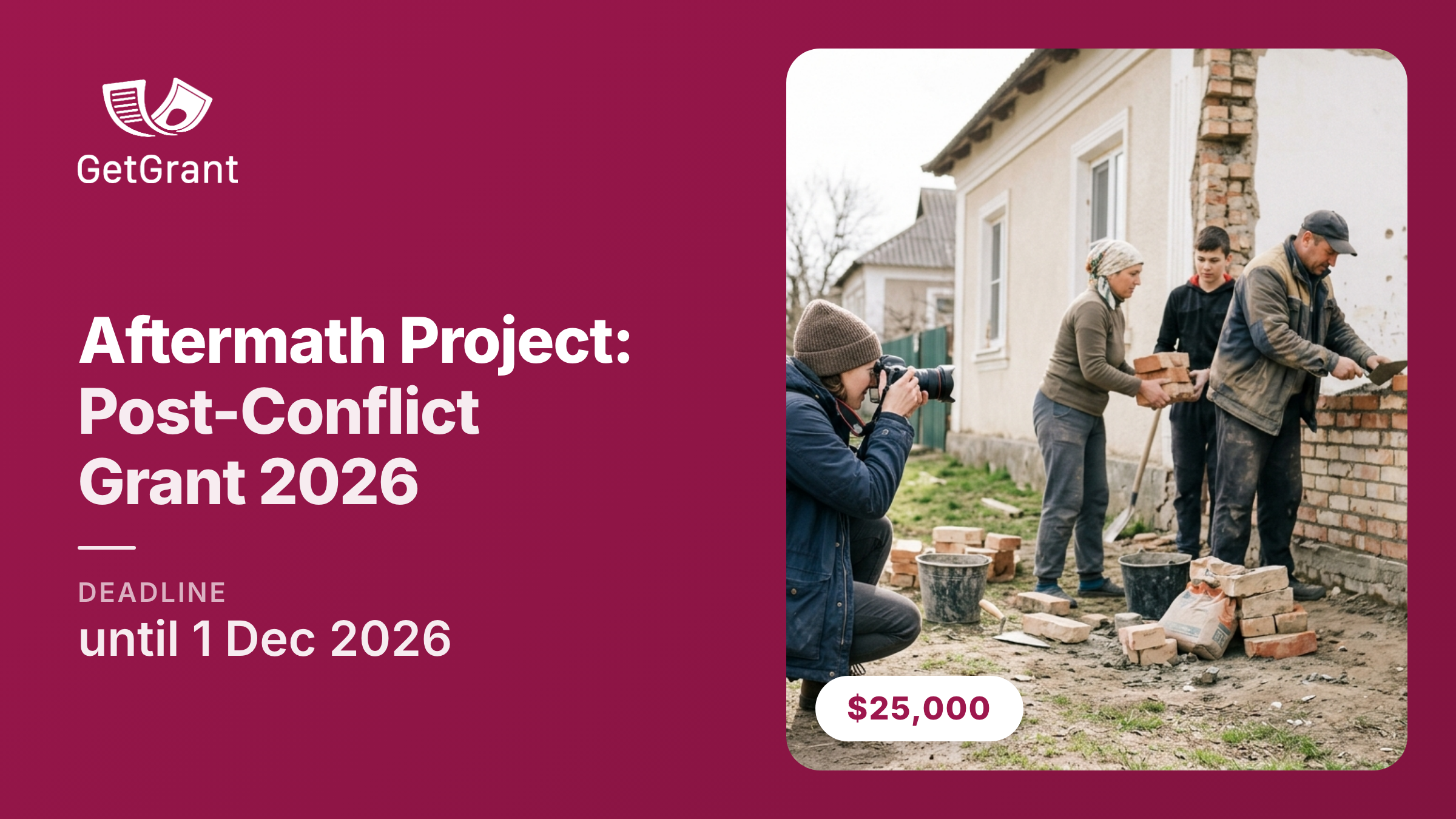
The Aftermath Project, a non-profit organisation based in the United States, has opened applications for its 2026 Post-Conflict Grant. This annual programme supports documentary photographers and photojournalists worldwide who document the aftermath of armed conflicts, shedding light on the complex social recovery that unfolds long after active fighting subsides.
The programme provides a single grant of $25,000 to the winning photographer, alongside official recognition for four selected finalists. The submission deadline is 1 December 2026, and the grant recipient and finalists will be announced before the end of December 2026.
What is funded
The grant funds photography projects that document what is required to rebuild lives, restore homes, and reconstruct civil societies after armed conflict. The programme prioritises stories that address the lingering wounds of war and the struggle to create new avenues for peace, especially subjects that mainstream news outlets no longer cover.
Eligible proposals can address past conflicts or still-unspooling aftermaths in regions experiencing ongoing fallout, such as Ukraine or Gaza. Funding is disbursed in installments, starting with 50% at project onset, followed by 40% midway through upon receipt of required interim reports, and the final 10% upon project completion.
Who can apply
The call is open to working photographers from any country worldwide who seek to illuminate post-conflict issues and encourage public dialogue. There are no geographical restrictions on the applicant’s origin or the location of the project.
Full-time students are not eligible to apply. In addition, current employees, directors, and advisory board members of The Aftermath Project, as well as selection judges and their immediate family members, are excluded from applying.
Conditions and requirements
Photographers retain all copyright to their work throughout the grant cycle and beyond. However, the selected winner must provide 12 archival photographic prints measuring 16×20 inches or larger, selected in collaboration with the organisation, for its permanent archives.
The winner must also make at least 30 images available to the organisation for potential exhibitions, educational materials, publications, and press publicity. Finalists are required to provide 10 to 15 images for the same promotional and educational purposes. If press or publicity usage generates licensing revenue, proceeds are split 50-50 between the photographer and the organisation.
How to apply
Applications must be compiled strictly according to the donor’s technical specifications and submitted via a file-sharing service such as WeTransfer, Google Drive, or Dropbox to the organisation’s dedicated email address. No supplementary materials beyond the requested documents will be accepted.
The submission package must contain a signed application form in PDF or JPG format, a two-page project proposal in Word format, a two-paragraph professional biography, a separate caption document, and a portfolio of up to 30 JPG images. Portfolio files must be labeled with the photographer’s surname and a sequential number, sized to 1,200 pixels on the longest side at 72 dpi, and must not exceed 2 MB per file.
Practical tip. Follow the strict file formatting and portfolio labeling rules meticulously, as only complete applications adhering to the technical guidelines will be reviewed. Ensure your images are capped at 1,200 pixels and 2 MB each, embed caption details into the photo metadata, and place the required one-sentence summary at the top of your two-page proposal.
Applications are submitted on the donor’s page: theaftermathproject.org.
| Parameter | Details |
|---|---|
| Donor | The Aftermath Project (USA) |
| Programme | 2026 Post-Conflict Grant |
| Budget | USD 25,000 (one grant winner, four finalists) |
| Deadline | 1 December 2026 |
| Who can apply | Working photographers worldwide (excluding full-time students) |
| Geography | Worldwide |
| Type of support | Project grant |
See which other calls fit your organisation
The GetGrant database lists EU programmes, bilateral donors and foundations by organisation profile, with verified deadlines.
Frequently asked questions
Short answers based on the facts of this call